The five that cost me: shipping anywhere eBay lets you (ground to US territories can take weeks, and an Item Not Received case can force a refund), trusting the wrong carrier, not charging a handling fee, skimping on packing, and using the wrong carrier for the box size. Calculated shipping with a $1-2 handling fee is the safest setup for new sellers.
My second sale on eBay was a Makita XT288T power tool combo kit. It sold fast, and I was excited. Big sale, easy money, this eBay thing is going to be great.
Then I noticed the shipping address: Saipan, Northern Mariana Islands.
I had no idea what I was getting into.
The $200 Welcome to eBay
I packed up the Makita set and headed to the post office. That's when I learned my first lesson: items with lithium batteries can't fly. They have to go ground.
"No problem," I thought. Ground shipping it is.
A week later, the buyer messaged asking where his package was. I called USPS and they told me it was on a cargo ship from Los Angeles to the Mariana Islands. Could take another week. Then it has to clear customs and get processed.
I messaged the buyer explaining the situation — batteries can't fly, cargo ship is the only option for this type of item. He wasn't happy. The next day, he opened an Item Not Received case.
Now the clock was ticking.
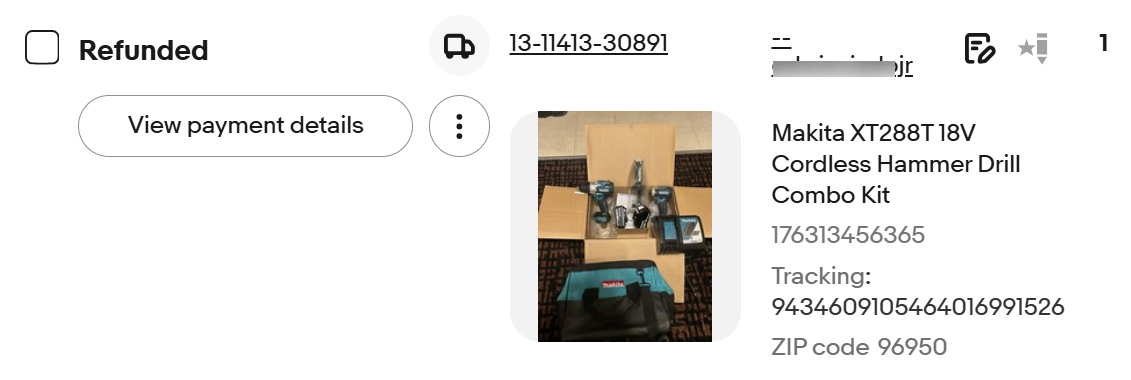
A few days later, the buyer messaged again asking me to cancel the shipment. He'd bought another tool set locally to start his job. Being new to eBay and watching that case countdown, I panicked. I refunded the buyer with the understanding that he'd refuse delivery when it arrived so I'd get my item back.
I also called USPS and put in a stop order at the Saipan post office.
You can probably guess what happened next.
The package arrived. The buyer picked it up anyway. The stop order "didn't take." I contacted eBay multiple times, and they kept telling me to work it out with the buyer directly.
Then I got a message from the buyer: "I will pay."
That's it. Two words. I sent him my PayPal information.
He never paid. Never responded again.
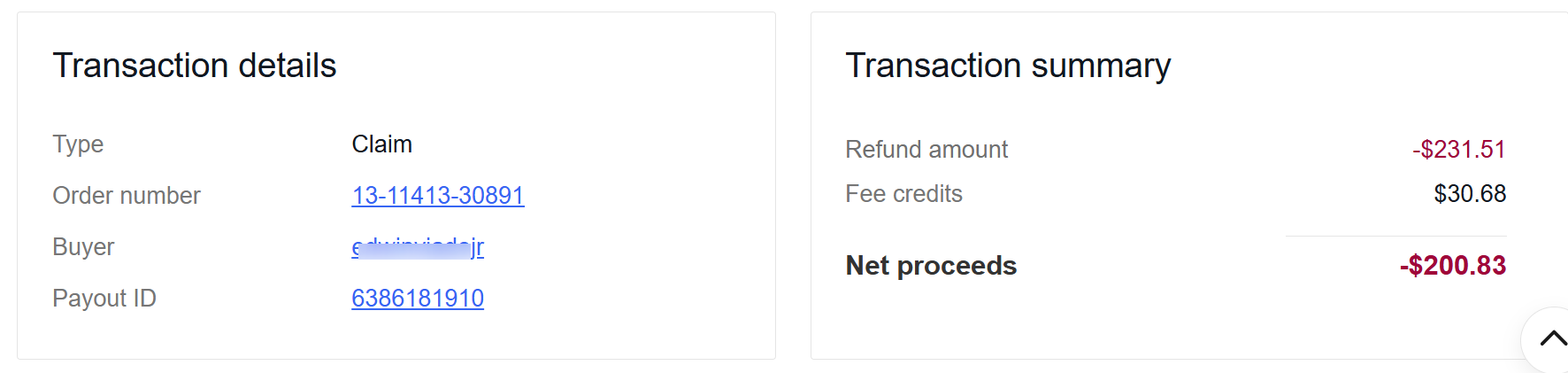
Final damage: $200.83 out of my pocket. No item. No payment. Welcome to eBay, where the buyer is king and seller beware.
I immediately went into my shipping settings and excluded all US territories, international destinations, and PO boxes. Lesson learned — the hard and expensive way.
Here are five shipping mistakes I've learned to avoid, starting with the one that cost me $200.
Quick eBay Shipping Setup Checklist
- Exclude risky locations — Block US territories in your shipping exclusions and enable eBay International Shipping for international orders.
- Choose the right carrier — USPS for packages under 25 inches, FedEx Ground/Home for larger items. Never UPS.
- Add a handling fee — Set calculated shipping with $1-2 handling fee to cover boxes, tape, and packing materials.
- Use quality packing — New boxes, proper padding, professional presentation. This prevents damage and generates positive feedback.
- Match carrier to size — For packages over 25 inches, check FedEx rates first. Often $25-30 cheaper than USPS for large items.
Mistake #1: Shipping Anywhere eBay Lets You
eBay's default settings let buyers from almost anywhere purchase your items. That includes US territories like Guam, Puerto Rico, US Virgin Islands, American Samoa, and the Northern Mariana Islands.
Here's what they don't tell you:
- Ground shipping to territories goes by cargo ship. This can take 2-4 weeks, sometimes longer.
- Batteries and hazmat items can't fly. If your item has a lithium battery, aerosols, or other restricted materials, ground is the only option.
- Item Not Received cases have deadlines. If the buyer opens a case before the package arrives, you're racing the clock.
- Refunding before delivery is risky. As I learned, even with a stop order, you might not get your item back.
I now exclude all territories and international destinations from my shipping policy. For international buyers, I only use eBay International Shipping (EIS) — it replaced the old Global Shipping Program. You ship to a hub in Illinois, and eBay handles everything from there: international shipping, customs, and any buyer issues. Once it reaches the hub, you're protected from Item Not Received claims.
The best part? If an international buyer wants to return an item, eBay handles it completely. They refund the buyer, and you keep the sale. You never see the item again — eBay liquidates it or does whatever they do with it. I actually love international orders now because of this. It's the closest thing to a "final sale" you'll ever get on eBay.
Mistake #2: Trusting the Wrong Carrier
Not all carriers are created equal, especially when something goes wrong.
I learned this with a Baby Lock sewing machine I sold for $350 plus $91 shipping. It arrived destroyed. I filed a damage claim with UPS. They sent someone to inspect the package. Claim denied.
UPS is notorious for this. They make you jump through hoops, then reject claims anyway. I wrote about this in detail in my complete guide to eBay returns — that single return cost me over $440 after shipping and fees.
But damage claims aren't the only UPS problem. They're also notorious for backcharging sellers weeks or even months after delivery. You ship a package, enter the correct dimensions, buyer receives it, everything seems fine. Then three weeks later you get hit with a $50, $100, or even $1,000+ surcharge because UPS claims your package was larger or heavier than what you entered.
The eBay community forums are full of horror stories: sellers getting charged $1,400 for a package that should have been $150. UPS claiming a box was 55 inches when it was 48 inches. "Inspection fees" and "additional handling" charges that appear out of nowhere. And disputing these charges? Good luck. eBay says talk to UPS, UPS says talk to eBay, and the money has already been pulled from your account.
I don't use UPS anymore.
USPS: For anything small to medium, under 25 inches in any dimension. Good rates, and if there's a weight discrepancy they tell you right away — no surprise charges months later.
FedEx Ground/Home: For larger items over 25 inches. Here's the thing most new sellers don't know: that big package that costs $50+ on USPS might only cost $15-20 on FedEx. The savings on large items is significant.
UPS: Never. Damage claims get denied, and they hit you with backcharges weeks after delivery. Not worth the risk.
Mistake #3: Not Charging a Handling Fee
Calculated shipping covers the postage. It doesn't cover your boxes, tape, bubble wrap, packing paper, or poly mailers.
Those costs add up fast. A decent box can cost $1-3. Packing materials add more. If you're shipping 100 items a month and eating $2 per package in supplies, that's $200 out of your profit. (These hidden costs are exactly why most sellers miscalculate their real profit.)
eBay lets you add a handling fee to calculated shipping. I add $2 to every order. It covers my supplies and then some. Buyers don't complain — they understand that packing costs money.
I use calculated shipping plus $2 handling on everything. This ensures I never lose money on shipping regardless of where the package goes, and my packing supplies are covered. For new sellers, this is much safer than free shipping, where one zone 8 shipment can wipe out your profit margin.
To see what free shipping or a handling fee does to your profit on a specific item, plug the numbers into the free eBay profit calculator.
Mistake #4: Skimping on Packing Quality
I only use new boxes. Never reused, never recycled grocery store boxes with old labels scratched off. Every item gets proper packing paper or bubble wrap. Clothing goes in new poly mailers.
Why? Because packing quality directly impacts your feedback and reputation.
Look at my recent feedback:
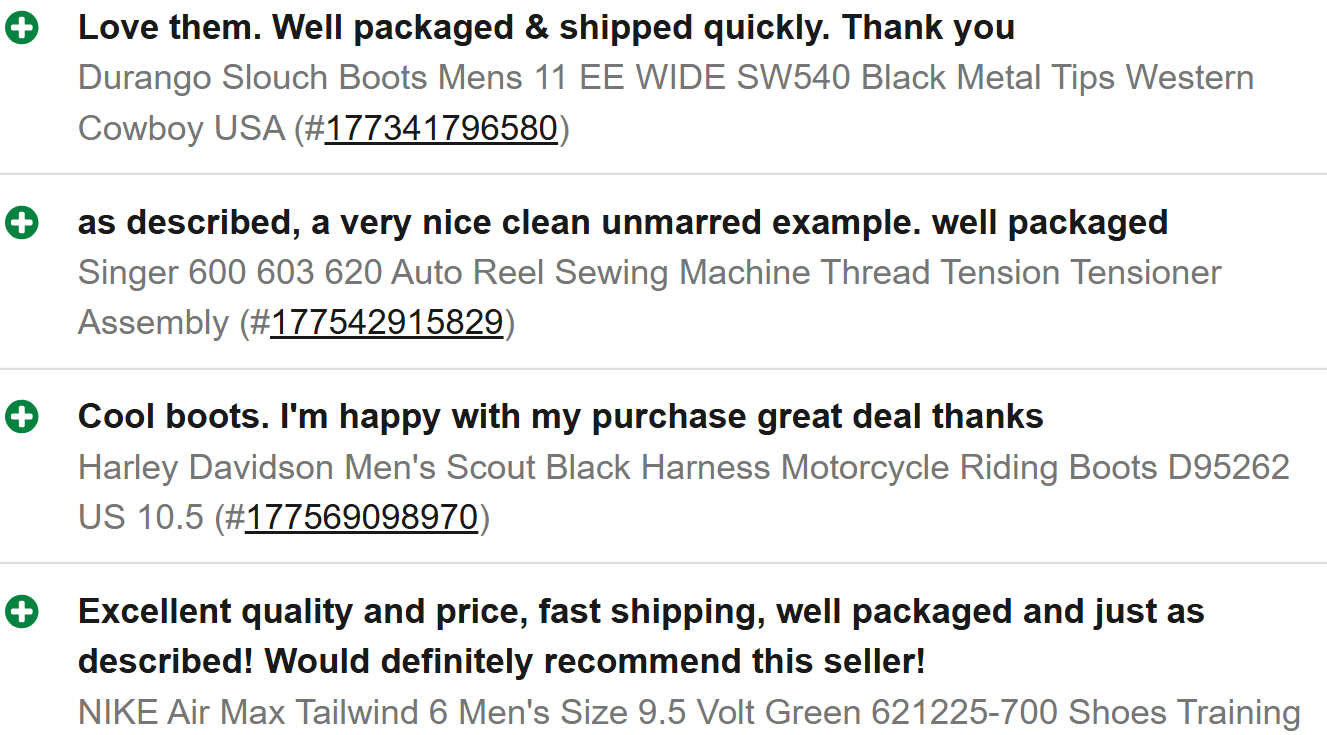
"Well packaged & shipped quickly." "Well packaged." "Fast shipping, well packaged." This isn't an accident — it's the result of treating every package like it matters.
Good packing does three things:
- Prevents damage claims. Items that arrive safely don't get returned.
- Generates positive feedback. Buyers notice and mention quality packing.
- Builds your reputation. More positive feedback means more buyer confidence, which means more sales.
The $2 handling fee I mentioned? It pays for this level of quality. And the feedback proves it's worth every penny.
Mistake #5: Using the Wrong Carrier for the Size
This is the math most new sellers don't know: carrier pricing changes dramatically based on package dimensions.
For small packages, USPS is usually cheapest. But once you cross certain size thresholds — especially 25+ inches in any dimension — USPS rates jump significantly due to dimensional weight pricing.
Meanwhile, FedEx Ground and Home Delivery have much flatter rate structures for larger packages.
A 26" x 12" x 8" package weighing 8 pounds:
- USPS Ground Advantage: $45-55 depending on zone
- FedEx Home Delivery: $18-22 depending on zone
That's a $25-30 difference on a single shipment. Scale that across dozens of large items and you're talking real money.
My rule of thumb: if it's over 25 inches in any dimension, I price check FedEx before defaulting to USPS. Nine times out of ten, FedEx is cheaper for the big stuff.
What I Do Now
After the Makita disaster and everything I've learned since, here's my shipping setup:
- Location exclusions: No US territories, no international (except EIS), no PO boxes
- International: eBay International Shipping only — ship to Illinois hub, eBay handles the rest, and I keep the sale even on returns
- Carriers: USPS for small/medium, FedEx for large, never UPS
- Shipping type: Calculated plus $2 handling
- Packing: New boxes only, proper padding, professional presentation
Is it more conservative than necessary? Maybe. But I'd rather lose a few sales to buyers in excluded areas than lose another $200 to a situation I can't control.
Shipping seems simple until something goes wrong. And when it goes wrong on eBay, the seller almost always pays the price.
Frequently Asked Questions
Should I ship to US territories on eBay?
Be very careful with US territories like Guam, Puerto Rico, US Virgin Islands, and Northern Mariana Islands. Ground shipping to these locations can take weeks by cargo ship, and if a buyer opens an Item Not Received case before it arrives, you may be forced to refund. Consider using eBay's Global Shipping Program instead, which protects you from these issues.
What is the best shipping carrier for eBay sellers?
USPS is best for small to medium packages under 25 inches. FedEx Ground and Home Delivery offer much better rates for larger items — a 25+ inch package that costs $50+ on USPS might only cost $15-20 on FedEx. Avoid UPS: their damage claims are notoriously difficult to win, and they're known for hitting sellers with surprise backcharges weeks or months after delivery for "oversized" packages, even when your measurements were correct.
Should I use free shipping or calculated shipping on eBay?
Calculated shipping with a small handling fee ($1-2) is safest for new sellers. This ensures you never lose money on shipping and covers your packing supplies. Free shipping works for lightweight items where you can accurately predict costs, but can cause losses on heavy items shipping to distant zones.
What is eBay International Shipping?
eBay International Shipping (EIS) replaced the old Global Shipping Program. You ship to a domestic hub in Illinois, and eBay handles international shipping, customs, and returns. The best part: if an international buyer returns an item, eBay refunds them and you keep the sale. You never see the item again, but you keep your money. It's the closest thing to a "final sale" on eBay.
Does packing quality affect eBay feedback?
Yes, significantly. Buyers frequently mention packing quality in feedback. Using new boxes, proper padding, and professional presentation leads to more positive reviews mentioning "well packaged" and "fast shipping." Good feedback increases buyer confidence and can improve your search ranking.
Track Your True Shipping Costs
Autotabit pulls your eBay orders automatically and shows you exactly what shipping is costing you — including the overages that eat into your profit.
Start FreeHave questions about eBay shipping? Contact me using the link in the footer — I read every message.