Look for quality brands, unique items and overlooked niches like vintage stainless steel cookware, and check eBay sold listings on your phone before you buy. Aim for one item that pays for the whole trip. That's how one $44 trip turned into $400+.
One item sold in 2 days for $150. The other six are now free inventory. Here's the exact breakdown of a real sourcing trip — what I grabbed, what I paid, and why each item was worth picking up.
I walked into my local thrift store with no specific plan. An hour later, I walked out with 7 items totaling $44. Two days later, one of those items sold for $150 — putting me into profit before the other six even had a chance to sell.
This is what sourcing actually looks like. Not every trip is a home run, but when you know what to look for, a single good find can pay for your entire haul and then some.
Let me break down exactly what I bought and why.
Quick Sourcing Checklist
- Check for premium brand markers — Look for "Made in England" on Dr. Martens, quality stitching, and authentic labels.
- Research unknown brands on your phone — Five minutes checking eBay sold listings can turn a $5 gamble into a $50+ sale.
- Target high-demand sizes — Women's 9-10 and men's 11-12 have limited local options, so buyers search online.
- Look beyond shoes — Vintage cookware (stainless steel, cast iron, Pyrex) is underpriced and overlooked.
- Find one item that pays for your trip — If one item covers your cost, everything else is free inventory.
- Track every sourcing trip — Log costs and tag items to their source to calculate your true ROI.
The Big Win: Dr. Martens Made in England
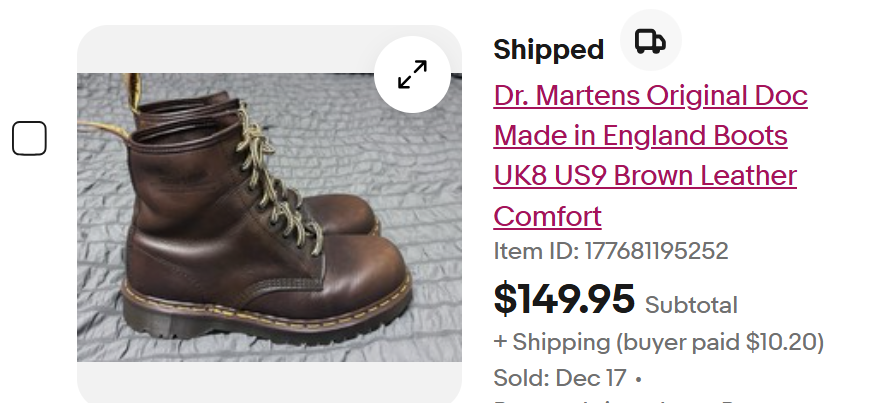
Cost: $9
Sold for: $149.95 + $10.20 shipping
Time to sell: 2 days
This is the find that made the trip. These aren't just any Dr. Martens — they're "Made in England" boots, and that distinction matters enormously.
Most Dr. Martens today are made in Asia. The ones still manufactured in England use higher-quality leather and traditional construction methods. They're worth 3-4x more than standard Docs. Always check the tongue — if it says "Made in England," you've found something special.
At $9, this was an instant buy. I listed them at $149.95 with calculated shipping, and they sold in 48 hours. After eBay fees and shipping costs, I netted roughly $105 profit — from a single pair of boots.
That $105 profit means the other 6 items I bought are now playing with house money. Even if they all sat for months, I'm already ahead.
The Rest of the Haul
Here's what else came home with me — and why I grabbed each item.
Skechers Floral Sneakers — $5
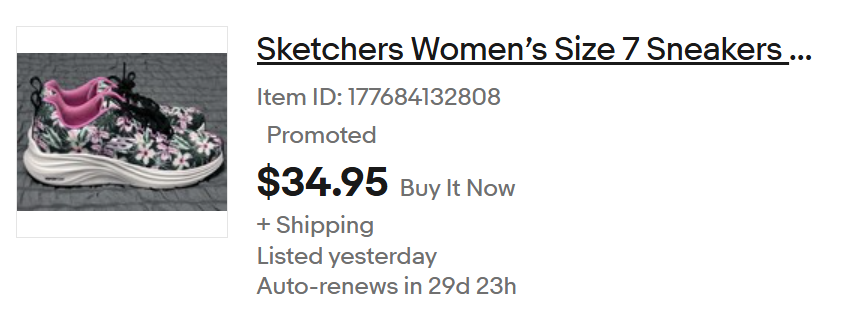
Listed at: $34.95
Why I grabbed them: Flower patterns sell. Seriously.
Floral prints on shoes consistently outperform plain versions of the same style. These Skechers are clean, the pattern is eye-catching, and women's size 7 moves quickly. At $5, I'm looking at a potential 5-6x return.
New Balance Fresh Foam 1165 — $5
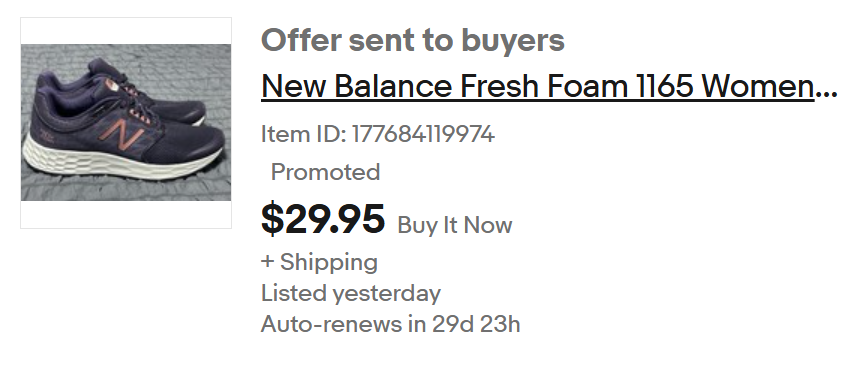
Listed at: $29.95
Why I grabbed them: Like-new condition, women's size 10
Two things made this an easy pickup: First, the condition — these look barely worn. Second, the size. Women's size 10 is a sweet spot for me. It's large enough that local options are limited, so buyers go online. I've had consistent success with this size.
New Balance is a trusted brand, and Fresh Foam is their comfort line. Someone with foot problems will happily pay $30 for quality walking shoes.
Skechers D'Lites — $5
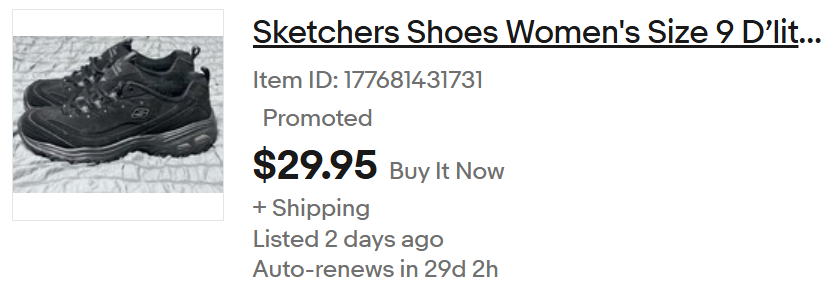
Listed at: $29.95
Why I grabbed them: Bread and butter
D'Lites are a workhorse style. They're comfortable, they're popular with an older demographic that buys online, and they sell consistently. Nothing flashy about this pickup — just a reliable $20-25 profit waiting to happen.
Xelero Steadfast Hiking Boots — $5
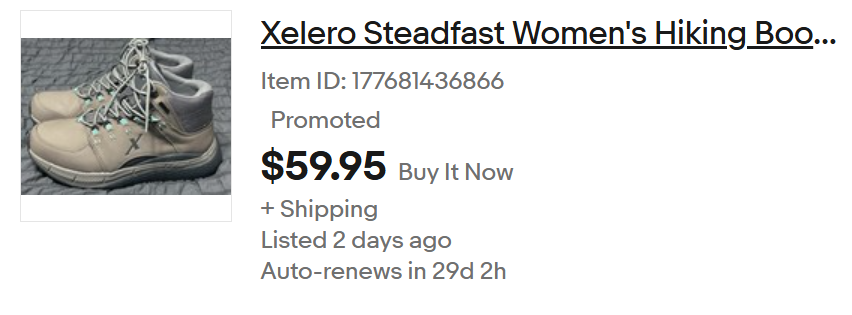
Listed at: $59.95
Why I grabbed them: $250 retail, quality brand most people don't recognize
Xelero is a specialty footwear brand focused on comfort and stability. These boots retail for around $250 new. Most thrift store shoppers (and resellers) walk right past them because they don't recognize the brand.
I priced them to sell at $59.95 and mentioned the retail price in my description. When someone searches for comfortable hiking boots and sees "$250 retail, selling for $60," that's a compelling value proposition.
If you see quality construction on a brand you don't recognize, look it up. Specialty brands in footwear, outdoor gear, and medical equipment are often worth significantly more than the thrift store realizes. Five minutes of research can turn a $5 gamble into a $50+ sale.
Vintage SteelCo Stainless Steel Cookware — $4 each
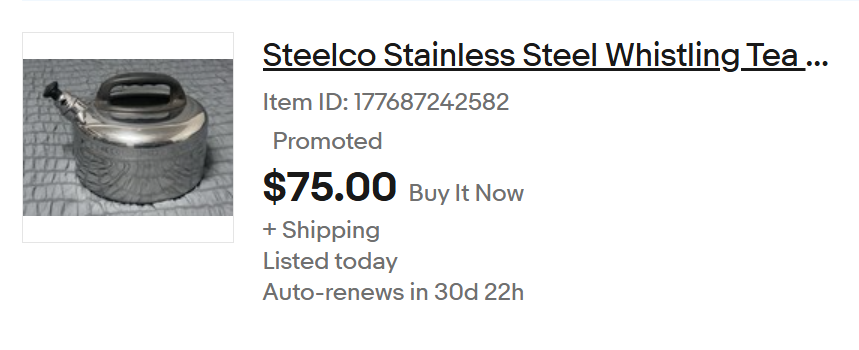
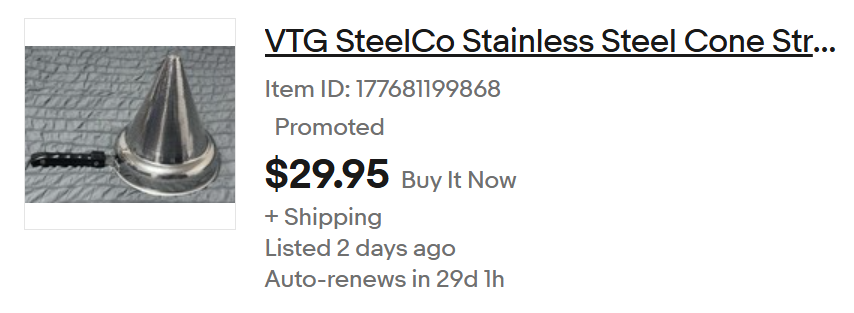
Tea Kettle listed at: $75.00
Cone Strainer listed at: $29.95
Why I grabbed them: Vintage cookware is a goldmine that most resellers completely overlook
While everyone fights over the shoes, I'm in the housewares aisle picking up mid-century stainless steel for $4.
SteelCo made quality stainless steel cookware decades ago. Collectors and people who appreciate buy-it-for-life kitchenware will pay real money for these pieces. The kettle in particular has that classic mid-century industrial look that's very much in demand.
This is a niche most resellers ignore completely. They see "old kitchen stuff" and keep walking. I see $100+ in inventory for $8.
The Math
I'm already up $80 — and I still have 6 items listed totaling $264.75 in potential sales. If even half of those sell at asking price, this $44 trip turns into a $200+ profit.
That's the power of the "one big hit" sourcing strategy. Find one item that pays for your trip, and everything else is gravy.
What I Track
Every sourcing trip gets logged. Here's what that looks like:
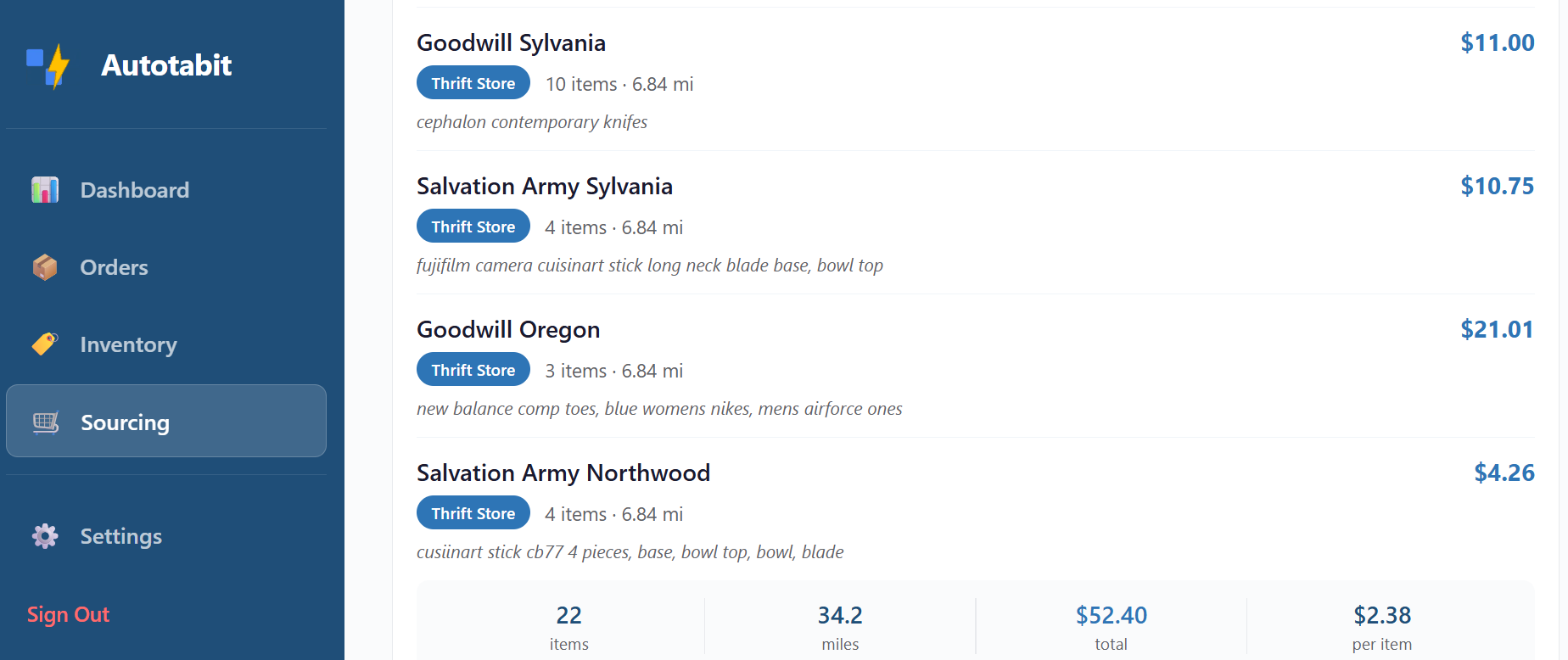
Every trip tracked with items, cost, and eventual ROI
When you track each trip's cost and tag items back to their source, you can see your true return on investment. That $44 trip is currently showing 241% ROI with only one item sold. As the others sell, that number will climb.
More importantly, tracking helps you identify patterns. Which stores produce the best finds? Which categories give you the best margins? Which trips are worth repeating? You can't improve what you don't measure. (If you're not sure what to track, here's my breakdown of what actually counts as profit.)
Lessons From This Trip
Every sourcing run teaches something. Here's what this one reinforced:
- One good find can carry a trip. The Dr. Martens paid for everything and then some. Don't pass on a great item just because you've already spent your "budget."
- Know your BOLOs. "Made in England" on Dr. Martens is worth money. You need to recognize these markers instantly.
- Overlooked niches = less competition. Vintage cookware, specialty footwear brands, quality tools — most resellers walk past this stuff.
- Condition matters, but so does demand. Like-new shoes in unpopular sizes sit. Good-condition shoes in sizes people need sell fast.
- Track everything. If I didn't track my trips, I wouldn't know that my local thrift store consistently delivers 200%+ ROI. It also makes tax time a lot easier.
Your Turn
Next time you're at a thrift store, slow down. Check the tags on the Dr. Martens. Look up that weird brand name on your phone. Wander through housewares instead of just hitting the shoes.
A $44 trip turned into $80+ profit in two days, with another $264 still in play. That's not luck — it's knowing what to look for and having a system to track it.
The items are out there. You just have to recognize them.
Frequently Asked Questions
What should I look for when thrifting to resell on eBay?
Focus on quality brands, unique patterns, and overlooked niches. For shoes, look for "Made in England" Dr. Martens (worth 3-4x regular Docs), known comfort brands like New Balance and Skechers, and specialty footwear. For housewares, vintage stainless steel cookware is often underpriced and overlooked by other resellers.
How much should I spend on a thrift store sourcing trip?
There's no fixed amount, but the goal is to find at least one item that can pay for your entire trip. A $44 trip where one item sells for $150 means the other 6 items are essentially free inventory. This "one big hit" strategy reduces risk significantly.
What are the best thrift store items to flip on eBay?
Shoes consistently perform well, especially quality brands in good condition. Women's sizes 9-10 often sell quickly due to demand. Vintage kitchenware (stainless steel, cast iron, Pyrex) is a goldmine that most resellers walk past. Look for items where you can verify retail value to price confidently.
How do I know if a thrift store item is worth buying?
Check eBay sold listings on your phone before buying. Look for items that have sold recently at prices that give you at least 3-4x your cost after fees. Consider condition, brand recognition, and whether you can identify a specific buyer (athletes, collectors, people with specific needs). To see the most you can pay for an item, enter its sold price in the free eBay Sourcing Calculator - it takes out eBay's fees and shipping for you.
Should I track my thrift store sourcing trips?
Yes. Tracking each trip's cost, items purchased, and eventual sales lets you see your true ROI. It also helps you identify which stores and which categories perform best for you. A $44 trip that returns $400+ in sales is a 9x return — but you won't know that unless you track it.
Track Every Trip. Know Your Real ROI.
Autotabit tracks your sourcing trips, tags items to their source, and calculates your true return on investment automatically.
Start FreeQuestions about sourcing or tracking your trips? Contact me using the link in the footer — I read every message.